


The Future of Human Machine Teaming (HMT)
Ukraine is rewriting the rules of warfare, but not in the way most expected. What’s emerging on the battlefield is not just faster drones or smarter systems, but a new kind of partnership between humans and machines that is already changing how decisions are made and missions are executed. But the real shift lies in what humans stop doing, and what machines start taking on.

What is Data Sovereignty and why is it important for defence
Most organisations assume their data is secure if it sits within national borders, but that assumption is increasingly flawed. In this article, we unpack how laws like the US CLOUD Act can reach across jurisdictions, why “data residency” is not the same as true sovereignty, and how a new layer, capability sovereignty, is emerging as AI systems begin to shape decisions as much as the data itself.

Low-cost drone interception is now a strategic imperative for everyone
Uncrewed aerial systems (UAS) have evolved from niche military platforms into widely available technologies used across commercial, industrial, and recreational sectors.
Their rapid proliferation has unlocked enormous economic value, enabling new services in logistics, agriculture, infrastructure inspection, and media production. Yet the same accessibility has created a parallel security challenge.
Engineering Resilient Care:
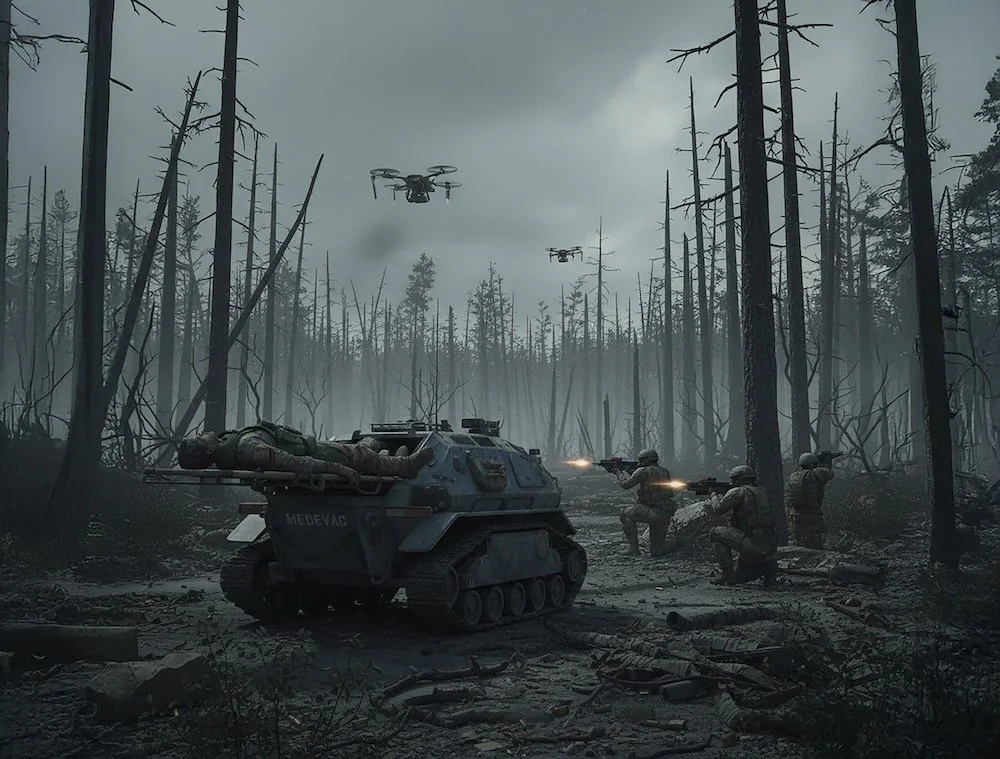
Military medicine is no longer just about treating casualties after an incident As defence medical services collide with AI, autonomy, and digital health, they are being quietly re-engineered into predictive, data-driven systems with implications far beyond the battlefield.

From Theory to Theatre:
For decades, directed energy weapons existed largely in theory and fiction, their promise confined to research papers and concept studies. Today, lasers and high-power microwaves are moving into operational service across the UK, the US, and allied forces, reshaping air defence, counter-drone strategies, and the economics of modern warfare.

The Saturation Trap:
You do not need to destroy an air defence system to defeat it. You only need to exhaust it. Swarming drones turn cheap, disposable machines into a strategic weapon, exposing a cost and complexity gap that legacy defences were never designed to survive.

Mesh over Metal
For over a century, military communications were built around a simple logic: radios connect people. Orders flowed down hierarchical chains, reports flowed back up, and information moved along predefined paths. This model shaped the way forces organised themselves on the battlefield.
But now, that paradigm is now under sustained pressure.

The Suwałki Problem
The Suwałki Gap, a slim stretch of land along the Polish–Lithuanian border, may be just 65 to 100 kilometres wide, but its strategic importance for NATO is immense. How quickly and efficiently forces can move through it could make the difference between deterrence and disaster.
The Smart Battlespace
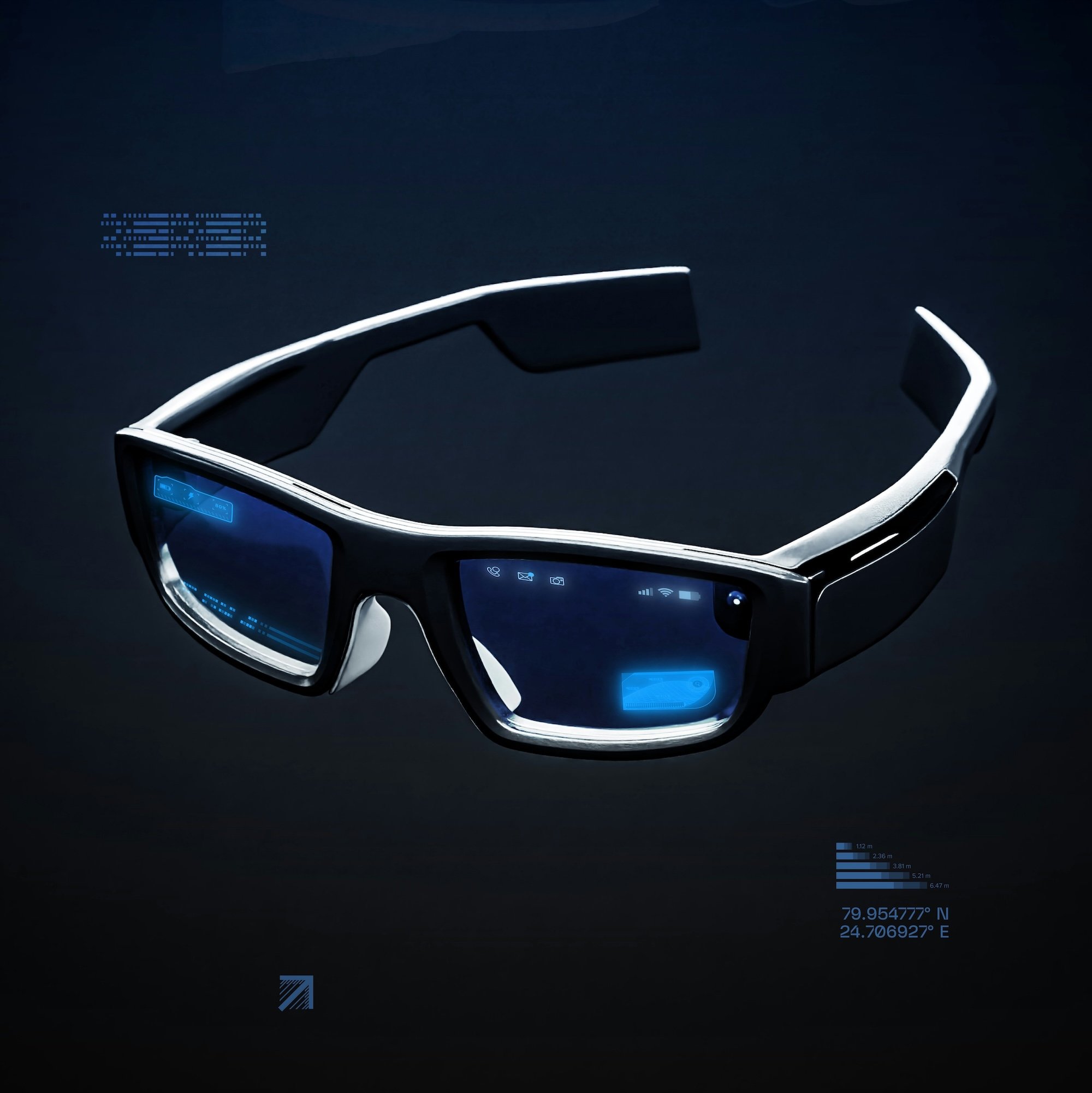
Cities have always been the most demanding battlespace. Dense, crowded, and constantly shifting, urban terrain compresses time, space, and decision-making in ways few environments can. Yet the tools used to understand it have barely evolved beyond maps, imagery, and reports. A new, largely unseen layer is now taking shape, that merges digital intelligence with the physical city itself: Augmented reality (AR).
Cognitive Warfare
In the twenty-first century, conflict has expanded far beyond guns, borders, and physical terrain. Strategic competition increasingly targets how people think, decide, and assign trust. This shift has given rise to what military planners and scholars describe as cognitive warfare, a form of contest that operates not on the battlefield, but within the human mind.

From Kinetic Threats to Biological Risk
For decades, Western defence strategy has been shaped by kinetic threats, conventional military power, territorial defence, and deterrence based on visible force. While these capabilities are still essential, they are no longer sufficient on their own. Biological risk is emerging as a strategic defence issue that challenges the assumptions underpinning traditional military postures.

The Sensor Race
As low-cost drones proliferate, the decisive advantage is shifting away from interceptors and jammers, and upstream towards detection, classification and attribution. Passive RF, acoustic and optical sensing are becoming foundational, not supplementary.

The Undersea Front
Most of the world’s internet traffic runs under the sea. Submarine fibre-optic cables carry the vast majority of international data, connecting markets, banks, cloud platforms and military networks. Recent incidents in Northern Europe made this glaring strategic weakness painfully.

The Second Brain
Artificial intelligence is increasingly discussed as a transformative force in modern warfare, but much of that discussion risks overstating certainty.
In this article, we explore how AI might support soldier decision-making, where its strengths and limits lie, and why the human role remains central even as machines become more capable.

Designing the Threshold
Force is often treated as a binary choice, restraint or destruction. In reality, most decisions are made in the space between. As escalation risks rise, the ability to shape outcomes without crossing irreversible thresholds is becoming a strategic advantage. This piece explores how non-lethal capabilities are evolving into systems that expand decision space and redefine how force is applied under pressure.