The Sensor Race
How passive RF, acoustic and optical sensing will shape the next generation of counter-UAS systemsCounter-drone capability is often discussed in terms of effectors, jammers, interceptors or kinetic defeat. These elements are visible, decisive and easy to brief. Yet they are no longer the centre of gravity. As affordable unmanned aerial systems proliferate, the decisive advantage is shifting upstream, towards detection, classification and attribution. In practical terms, the future of counter-UAS will be shaped less by how drones are defeated than by how they are detected and understood.
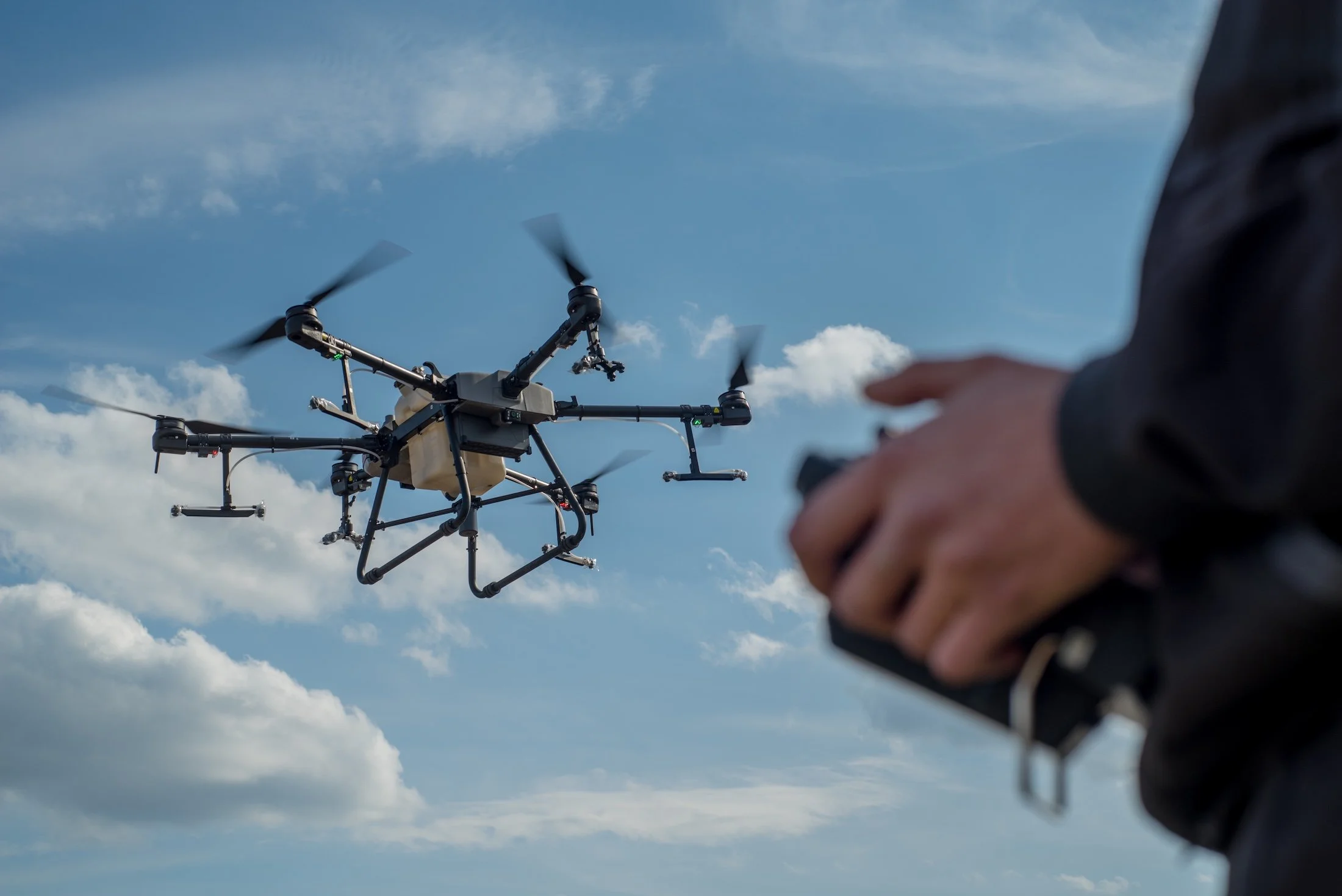
The rapid diffusion of low-cost, commercially available drones has eroded the traditional advantages once held by states and advanced militaries. What was previously a niche aerospace capability is now widely accessible, adaptable and disposable (1). Against this backdrop, counter-UAS is no longer a narrow air defence problem. It is a systems challenge that unfolds in civilian airspace, critical infrastructure environments and legally constrained settings.
This has triggered a quiet but consequential sensor race, one that is reshaping counter-UAS architectures around passive sensing, data fusion and decision support.
Why sensors now matter more than interceptorsTraditional air defence doctrine assumes early warning, clear identification and a relatively uncluttered battlespace. Counter-UAS operates under very different conditions. Small drones fly low and slow, blend into environmental noise and often appear only briefly before reaching their objective (2). In civilian contexts, airports, ports, energy sites and urban centres, the legal and safety thresholds for action are high, while tolerance for error is low.
Under these constraints, early detection and reliable classification become more valuable than rapid destruction. Passive sensing technologies, including radio frequency (RF), acoustic and optical systems, are therefore moving from supplementary tools to foundational elements of counter-UAS systems (3).
Passive RF sensing: reading the invisiblePassive RF sensing exploits the fact that most drones rely on electromagnetic emissions. Command-and-control links, telemetry, navigation signals and even unintended emissions leave identifiable RF signatures. These can be detected, analysed and catalogued without transmitting any signal in return.
The advantages are significant. Passive RF sensors are difficult to detect, do not interfere with civilian communications, and can operate persistently over wide areas. When paired with signal libraries and behavioural analytics, they can identify drone types, communication protocols and, in some cases, operator habits or locations (4).
However, RF sensing has clear limitations. Pre-programmed or autonomous drones may emit little or no RF energy once airborne. Adversaries are also adopting frequency hopping, encryption and emission control techniques to reduce detectability. As a result, RF sensing is most effective when integrated with other sensing modalities rather than used in isolation (2).
Acoustic sensing: pattern recognition in cluttered environmentsAcoustic sensing has historically been viewed with scepticism, largely due to environmental noise, weather effects and high false-alarm rates. Recent advances in signal processing and machine learning have altered that assessment. Modern acoustic systems can recognise drone-specific signatures based on motor type, rotor configuration and flight behaviour, even in complex environments (5).
Acoustic sensing offers particular value where radar performance is degraded, such as dense urban areas or complex terrain. It also remains effective against drones that minimise RF emissions. Its principal limitations are range and ambiguity. Acoustic sensors are inherently local and vulnerable to interference from industrial or traffic noise. Their greatest value lies in corroboration, providing confirmation and classification cues when combined with RF or optical data.
Optical and electro-optical sensing: context and confirmationOptical, infrared and electro-optical sensors provide capabilities that passive RF and acoustic systems cannot. They enable visual confirmation, assessment of payloads and analysis of flight behaviour relative to protected assets. They are also critical for evidentiary purposes, supporting attribution, legal action and post-incident analysis (3).
These systems are resource intensive. They require line of sight, are affected by weather and lighting, and generate large volumes of data. As a result, their role is increasingly shifting from wide-area detection to targeted verification, cued by other sensors. This reflects a broader architectural trend towards layered, sensor-driven decision support rather than platform-centric surveillance.

Fusion over dominanceNo single sensor provides comprehensive coverage. The competitive advantage in counter-UAS lies in the fusion of multiple sensing modalities across space and time. Sensor fusion enables weak or ambiguous signals to be correlated into actionable assessments, reducing false positives and supporting proportionate responses (1).
This matters because counter-UAS is as much a governance problem as a technical one. Decisions to intervene, particularly in civilian airspace, must be justified, auditable and legally defensible. Multi-sensor confirmation supports these requirements far more effectively than reliance on a single detection method.
From detection to decisionDetection alone does not constitute defence. The harder challenge lies in decision-making under uncertainty. Who owns sensor data? Who has authority to act? What thresholds trigger intervention? How is intent assessed when drones may be recreational, commercial or malicious?
These questions sit at the intersection of technology, law and policy. Effective counter-UAS systems must therefore be designed not only to detect drones, but to support human decision-making under legal, political and institutional constraints (4).
Designing for persistence, not perfectionThe sensor race reflects a broader shift in counter-drone thinking. Perfect exclusion is unrealistic. Low-cost systems, swarming tactics and rapid adaptation mean that some drones will penetrate defences. The strategic objective is persistent awareness, early warning and functional continuity, not absolute control of airspace (2).
Passive sensing technologies are well suited to this approach. They enable continuous monitoring without escalation, support pattern analysis over time, and contribute to resilience rather than brittle defence.
The quiet future of counter-UASThe next generation of counter-drone systems will not be defined by dramatic intercepts or visible force. It will be shaped by quiet, persistent sensing, integrated architectures and governance frameworks that allow proportionate action without overreaction.
In that sense, the sensor race is not merely a technological competition. It is a test of whether states and operators can adapt from platforms to systems, from exclusion to resilience, and from reaction to anticipation. Those who succeed will not stop every drone, but they will deny drones their strategic value as tools of ambiguity and disruption.
Also By Us:










References:
1. European Commission. (2023). Formulating an EU counter‑drone policy (COM(2023)0659). Retrieved from https://www.europarl.europa.eu/RegData/docs_autres_institutions/commission_europeenne/com/2023/0659/COM_COM%282023%290659_EN.pdf Europarl
2. European Union Publications Office. (2024). Counter‑drone systems and data fusion (Joint Research Centre report). Retrieved from https://op.europa.eu/en/publication-detail/-/publication/240b5f23-b382-11ef-acb1-01aa75ed71a1/language-enPublications Office of the EU
3. NATO Communications and Information Agency. (2024). NATO tests counter‑drone technology during interoperability exercise. Retrieved from https://www.ncia.nato.int/about-us/newsroom/nato-tests-counter-drone-technology-during-interoperability-exercise
4. The Counter‑UAV Fight. (2025). Retrieved from https://euro-sd.com/2025/02/articles/43831/the-counter-uav-fight/ euro-sd.com
5. Dobija, K. (2023). Countering Unmanned Aerial Systems (UAS) in military operations. Retrieved from https://sd-magazine.eu/index.php/sd/article/view/195
6. High‑level workshop on the current state of counter UAS systems. (2024). Retrieved from https://www.eurocontrol.int/event/high-level-workshop-current-state-counter-uas-systems
7. NATO Review. (2020). Countering drones: looking for the silver bullet. Retrieved from https://archives.nato.int/nato-review-countering-drones-looking-for-the-silver-bullet